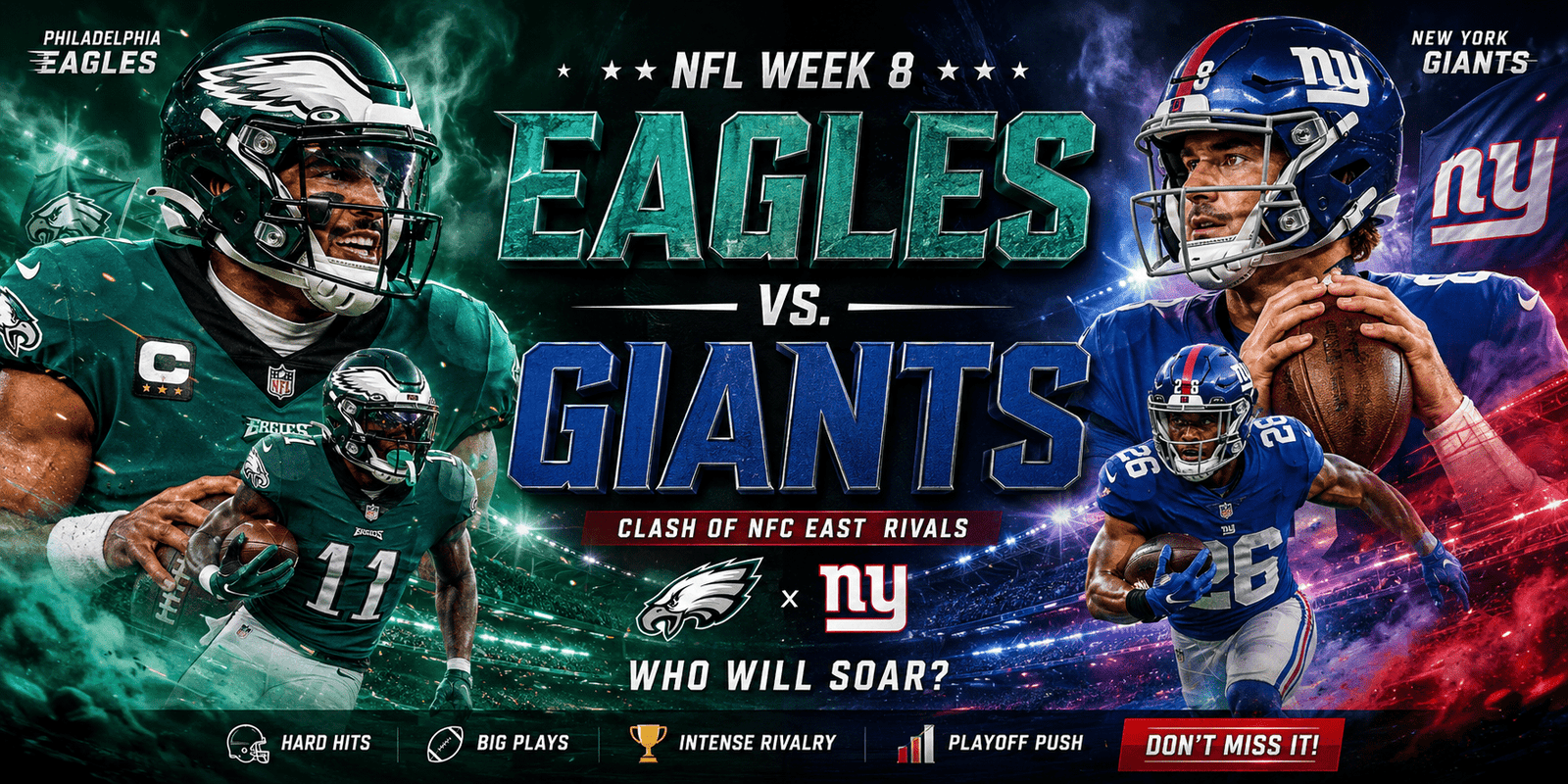
Eagles vs Giants
There are NFL games you watch for the score. Then there are games you watch because something bigger is at stake — pride, bragging rights, and a century of bad blood. The Philadelphia Eagles versus New York Giants rivalry falls squarely in that second category.
This isn’t theater. It’s geography, it’s identity, and it’s 90-plus years of two cities that genuinely cannot stand each other settling things on a football field. If you want to understand the NFC East — really understand it — you start here.
A Rivalry Born in the 1930s, Still Burning Today
The Eagles and Giants first met in 1933. Back then, the NFL was still figuring itself out. Two franchises from neighboring cities started building something that neither fan base would ever be able to shake.
The early decades belonged largely to New York. Championship pedigree, legendary coaches, and Hall of Fame talent gave the Giants an early edge in the all-time series. Philadelphia, though, was never going to just accept that role. The Eagles rebuilt, retooled, and came back swinging — hard.
What makes this rivalry genuinely different from others is the geographic element. Eagles and Giants fans don’t just see each other on game day. They work together, sit in traffic together, and absolutely argue about football together every single week. That proximity makes losses sting longer and wins feel sweeter.
The Moments That Fans Will Never Stop Talking About
Every great rivalry has its defining plays. Eagles-Giants has more than most.
The Miracle at the Meadowlands (1978): With the Giants nursing a late lead and needing only to fall on the ball, quarterback Joe Pisarcik inexplicably tried to hand off to Larry Csonka. The ball hit the ground, Herman Edwards scooped it up, and Philadelphia had a touchdown. That single play cost a head coach his job, reshuffled the Giants’ entire organization, and lived in Philadelphia lore forever.
DeSean Jackson’s Punt Return (2010): Thirty-two years later, the script flipped. Down by 21 points going into the fourth quarter, the Eagles staged one of the most stunning comebacks in NFL history. Philadelphia won 38–31 thanks to Jackson’s walk-off punt return as time ran out, and Giants supporters are still in a nightmare.
Multiple Playoff Collisions: These teams have also met when seasons hang in the balance. Postseason matchups between them carry a different weight entirely — uglier, slower, and decided by inches rather than big plays.
Where Things Stand in the Modern Era
The current version of this rivalry has a clear lean. Over the past several seasons, the Eagles have controlled the series with a combination of offensive firepower and a defensive front that routinely bullies opposing offensive lines.
The numbers back that up. In recent meetings, Philadelphia has dominated time of possession, run the ball at will, and generated turnover pressure that the Giants have struggled to handle. Their rushing output has frequently doubled what New York managed on the same afternoon.
The Giants haven’t been helpless, though. When their defense generates early pressure and limits Philadelphia’s ability to establish rhythm, the games tighten up considerably. New York has shown the ability to make things uncomfortable even in losses — which is exactly what makes this rivalry functional rather than lopsided.
The Players Driving This Matchup Right Now
Jalen Hurts, QB — Philadelphia Eagles
Hurts has evolved into one of the more difficult quarterbacks to scheme against in the entire league. His ability to extend plays, absorb contact, and execute in high-pressure situations has frustrated multiple Giants defensive coordinators. He doesn’t just make throws — he wins scramble situations that should result in losses. In rivalry games especially, his composure has been notable.
The Eagles’ Offensive Line
Philadelphia’s offensive line is a unit that legitimately shapes outcomes in this series. When they win the trenches — and they usually do — the Eagles’ ground game becomes near-impossible to stop. Multiple 200-plus rushing yard performances in recent Giants matchups reflect that reality.
The Giants’ Pass Rush
New York’s best path to an upset typically runs through their defensive front. When they generate consistent quarterback pressure and force Hurts into quick decisions, the Eagles become more manageable. Those performances have been inconsistent, but the talent is present.
How Coaches Actually Game-Plan This Series
Both coaching staffs approach this matchup with genuine seriousness, and the adjustments they make — particularly at halftime — often determine the outcome more than any individual talent advantage.
Philadelphia tends to open games with a heavy emphasis on establishing the run. The logic is straightforward: tire out New York’s defensive front early, open up play-action opportunities late, and control the clock in a way that keeps their own defense off the field. When that plan works cleanly, the game gets away from the Giants quickly.
New York’s counter-strategy typically involves complex blitz packages designed to disrupt the Eagles’ timing before the run game gains traction. The Giants also lean on clock control through their own ground game when the personnel allows — keeping Hurts and the Philadelphia offense on the sideline is genuinely valuable.
The games that come down to the wire are usually the ones where both coaching staffs have adapted well and the halftime adjustments have neutralized each other’s primary weapons.
What This Game Means for the NFC East Race
The NFC East is not a division where comfortable leads exist for long. Dallas, Washington, Philadelphia, and New York have each gone through cycles of dominance, and the head-to-head results within the division almost always factor into the final standings.
A Philadelphia win over New York in a close game doesn’t just affect the standings by one game — it can provide a tiebreaker advantage that proves decisive in January. The same applies in reverse. Giants wins against the Eagles have historically resurrected seasons that looked finished and knocked the Eagles off top seeds they seemed certain to secure.
That’s the practical reason these games matter beyond the emotional ones. Every snap carries potential playoff implications, and both teams understand it.
The Fan Experience: A Category of Its Own
The atmosphere at an Eagles-Giants game deserves its own conversation. Both fan bases bring an intensity that goes beyond typical NFL crowds — and that intensity starts in the parking lot, not at kickoff.
Eagles fans, who have a well-documented reputation for passionate (and occasionally unfiltered) support, treat this matchup as one of the two or three most important days on their annual calendar. Giants fans match that energy with a New York edge that makes for genuinely memorable crowd dynamics.
For neutral fans attending for the first time, the experience is often more intense than expected. The chants, the noise level during opposing third downs, and the emotional swings throughout the game create something that’s difficult to replicate.
Breaking Down the Key On-Field Battles
Offensive Line vs. Defensive Front
This is where Eagles-Giants games are typically decided. When Philadelphia’s offensive linemen consistently win individual matchups, the run game opens up, Hurts gets clean pockets, and the Giants’ defensive backs have a very long afternoon. When New York’s defensive linemen hold their gaps and generate pressure from the interior, the Eagles become far more beatable.
Turnover Differential
In recent meetings, the team that has won the turnover battle has almost universally won the game. The Eagles’ defense creates negative plays at a higher rate than most, and when that translates into actual turnovers against a Giants team prone to mistakes, the point differential can grow quickly.
Red Zone Efficiency
Both teams have identities built around getting into the red zone consistently. Who converts those opportunities — and who settles for field goals — has been a significant factor in several close outcomes over the past few seasons.
Prediction Framework: What to Watch in the Next Matchup
Rather than projecting a final score, here’s the framework for evaluating how the next Eagles-Giants game will unfold:
- If Philadelphia runs for 150+ yards: The Eagles win. This has been true in nearly every recent meeting.
- If New York generates 4+ sacks: The game becomes genuinely competitive, regardless of the overall talent disparity.
- If the Giants win the turnover margin: An upset becomes a real possibility.
- If the game is decided in the fourth quarter: Historical data slightly favors Philadelphia, but the Giants have shown the ability to close out close games when they’re still in striking distance.
Weather will also be a factor in late-season meetings. Both teams are capable in the cold, but physical, run-heavy offenses typically benefit from poor conditions — which, again, tilts toward Philadelphia’s style of play.
What This Rivalry Teaches the Rest of the League
NFL analysts and coaches outside the NFC East study Eagles-Giants matchups because they illustrate something consistent: teams that control the line of scrimmage over a full 60 minutes win more than their share of divisional games.
Flashy offenses built on quick throws and spread concepts can dominate in the regular season. But in cold-weather, late-season, must-win divisional games — the kind that this rivalry regularly produces — physical football tends to win out. Defensive line depth, offensive line consistency, and the ability to manage the running game on both sides of the ball matter more in these environments than in October.
The Eagles have built their recent success around exactly those principles. The Giants, in their most competitive recent seasons, have countered with defensive front investments of their own. The chess match between those philosophies is what makes the film genuinely worth studying.
FAQs
What is the all-time series record between the Eagles and Giants?
The all-time record has shifted across different eras, with both franchises holding periods of dominance. As of recent seasons, the Eagles have narrowed a historical gap that once favored New York, and the two teams’ lifetime records are extremely competitive. The series is close enough that the next dozen games could shift the overall ledger meaningfully.
Have the Eagles and Giants met in the playoffs?
Yes, multiple times. Their postseason matchups have generally been lower-scoring, physical affairs decided by turnovers and defensive performance rather than offensive fireworks. Each one has carried significant stakes, and each one has contributed to the rivalry’s intensity.
Which individual players have most defined this rivalry over time?
Historically, Lawrence Taylor and Reggie White are the names that anchor conversations about this rivalry’s greatest performers. Michael Strahan and Brian Dawkins are close behind. In the current era, Jalen Hurts and Saquon Barkley — the latter now wearing Eagles green after his Giants tenure — represent the new generation of rivalry-defining talent.
Why does the running game matter so much in this matchup?
The geographic and climatic context of this rivalry means late-season meetings often happen in cold, windy conditions that reduce passing efficiency for both teams. Teams that can run effectively in those conditions control the clock, keep their defense rested, and limit the opponent’s opportunities. The Eagles have built an identity around exactly that approach.
Where can fans watch Eagles vs Giants games?
Broadcast rights rotate between FOX, CBS, NBC, and ESPN depending on the schedule. Streaming is available through NFL+ and various live TV streaming services. Check the official NFL schedule for kickoff times, network assignments, and local broadcast details.
How does this game affect NFC East standings?
Head-to-head results serve as the first tiebreaker within the division, which means a sweep of the season series can be the difference between a division title and a wild card berth — or between a first-round bye and a road playoff game. Both teams treat these two games differently than they treat any other regular-season contest.
Conclusion
The Eagles-Giants rivalry is one of those rare things in professional sports that doesn’t need embellishment. The history is real, the hatred is genuine, and the games consistently deliver exactly the kind of football both fan bases demand.
Whether you grew up watching it or discovered it recently, this matchup rewards attention. The chess match between coaches, the trench warfare between linemen, the turnover battles, and the occasional spectacular play that rewrites the narrative — it’s all there, every time these teams share a field.